
Wearable suitability
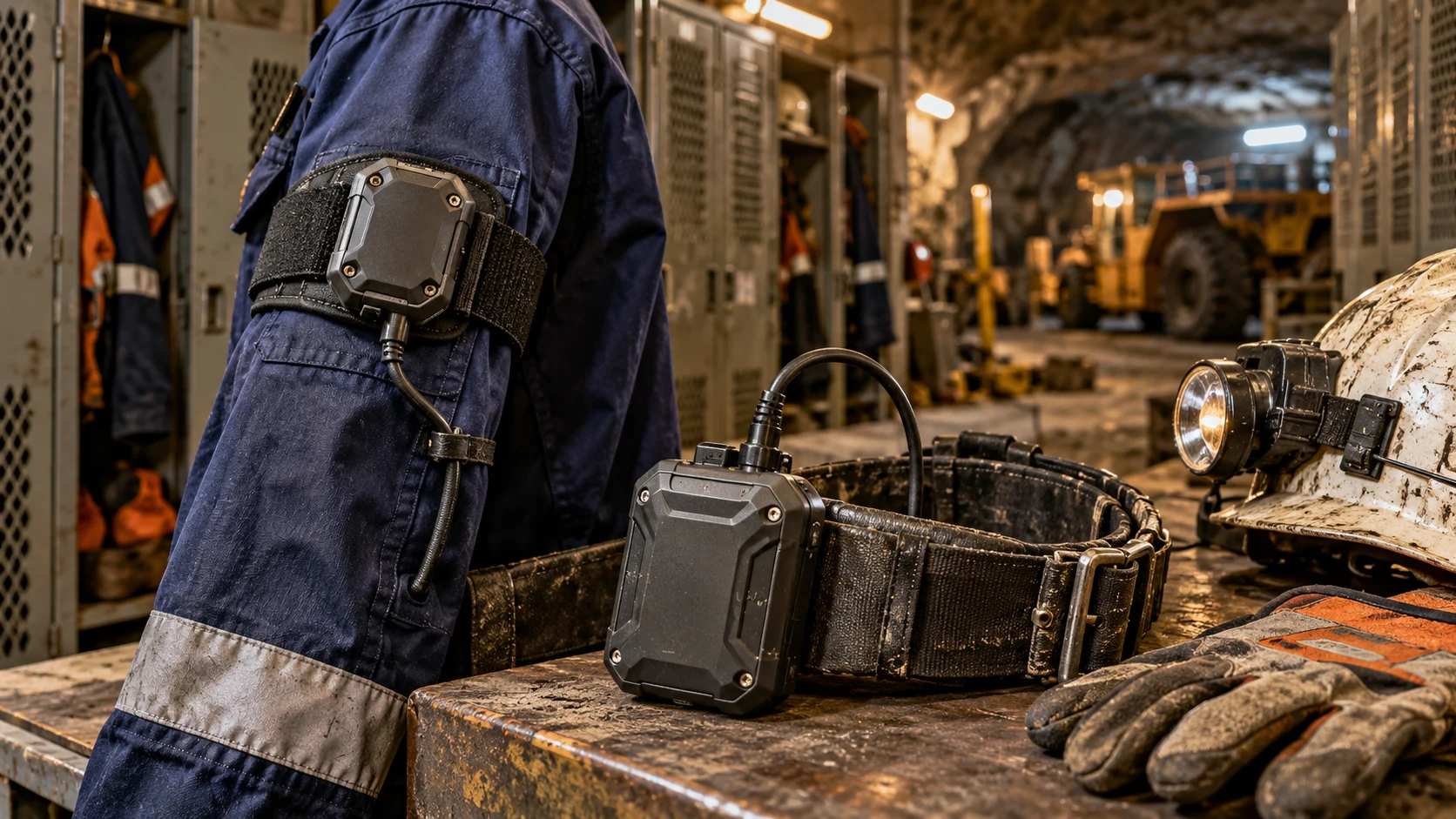
Assess protected belt modules, upper-arm or chest sensors against impact, ingress, snagging, skin contact, cleaning, PPE and shift endurance.
SOLUTION / WORKER HEALTH & FATIGUE RISK
Bring wearable indicators, working conditions and shift context into the mine’s occupational-health and fatigue programmes. Clinical interpretation and fitness-for-work decisions remain with authorised professionals.
SOLUTION SCOPE
Assess protected belt modules, upper-arm or chest sensors against impact, ingress, snagging, skin contact, cleaning, PPE and shift endurance.
Distinguish measured skin temperature from estimated core temperature. Validate derived strain scores for the intended workforce and task.
Review work intensity, PPE, heat exposure, recovery conditions and roster information alongside validated indicators.
Agree local actions, escalation roles and access to identifiable health information. Define what happens when the network is unavailable.
PRODUCTS & INTEGRATION
Selected rugged wearables, environmental instruments, device management and restricted reporting interfaces. Device selection and clinical protocols follow a site assessment.
DESIGN SCENARIO · ILLUSTRATIVE
An abnormal wearable indicator prompts a local check under the agreed protocol. An authorised professional considers the person and work context; a wearable score alone does not establish a diagnosis.
Reference agreement, usable-data time, nuisance alerts, wearability and response follow-through.
LET’S CONNECT
Tell us about your mine, work area or equipment system. We will discuss the scope, evidence and next steps for an assessment.